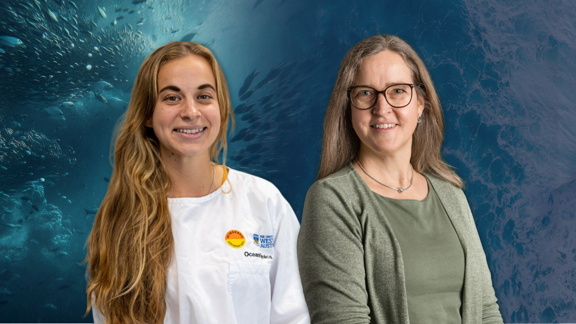
Scaling Ocean Biodiversity Monitoring with Environmental DNA
About This Webcast
Marine ecosystems are undergoing rapid change, creating an urgent need for scalable biodiversity monitoring tools. The Minderoo OceanOmics Centre at the University of Western Australia addresses this challenge by using genomics-based approaches to characterise marine biodiversity. Focusing on Australia’s marine vertebrates and regional ecosystems, the Centre integrates advanced sequencing infrastructure with collaborative networks to generate large-scale environmental DNA (eDNA) and whole-genome datasets. Central to this effort is scalability. Automated workflows spanning sampling, DNA extraction, library preparation, and high-throughput sequencing enable the efficient production of robust datasets. These automated platforms enhance throughput and data quality, supporting comprehensive biodiversity assessments across broad spatial scales. These datasets have been applied in collaborative research and monitoring initiatives, including the Ocean Discovery and Restoration Program delivered in partnership with Parks Australia. This project involved large-scale sample collection and processing across Australia’s marine estate. The resulting data has established biodiversity baselines, identified possible range extensions, and revealed previously undocumented diversity. The Centre is also generating high-quality marine reference genomes to further strengthen taxonomic resolution and improve reference databases that are critical for accurate biodiversity assessment. A commitment to open science underpins this work, with publicly accessible data, methods, and bioinformatic tools designed to foster collaboration and advance marine conservation outcomes. What secrets are hidden in a single drop of seawater — and what could they mean for the future of our oceans? This webinar offers a rare window into the science that is quietly rewriting what we know about marine biodiversity — and laying the foundation for how we protect it. If you believe the future of our oceans depends on better science, this is a conversation you won't want to miss. Register today. In this webinar, you will learn how: Automation of the eDNA workflow, from sampling to sequencing, has enabled us to scale-up data generation Large-scale genomic datasets can be used to inform marine conservation and management Open-access data, shared methods, and collaborative partnerships can progress marine genomics
Speakers
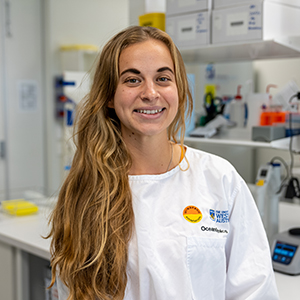
Laura Missen
Scientific Officer , University of Western Australia, Minderoo OceanOmics Centre
Laura Missen is a Scientific Officer at the Minderoo OceanOmics Centre at the University of Western Australia, where she focuses on the next generation of environmental DNA (eDNA) datasets for marine biodiversity monitoring. She has a background in genetics and marine biology, completing a Master of Marine Biology at James Cook University, Australia with a research dissertation investigating the phylogenetics of dwarf minke whales. Laura previously worked as a laboratory technician at TropWATER (JCU), where she gained technical skills in eDNA laboratory practices. At the OceanOmics Centre, she works on the optimisation, automation, and standardisation of eDNA workflows to enable scalable and robust datasets to inform marine conservation management. She is also involved in advancing emerging eDNA approaches, including long-read and shotgun sequencing technologies.
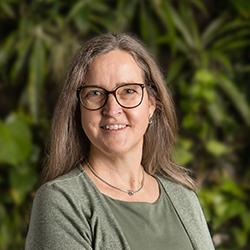
Brigitta Saul, PhD
Sr. Strategic Collaborations Manager , Promega Corporation
Brigitta Saul is a Strategic Collaborations Manager at Promega Corporation. As part of the Applied Sciences Business Unit, she has led Promega’s wastewater surveillance initiative since March 2020, serving as a liaison between researchers, product developers, application specialists, and end users of wastewater testing and disease surveillance solutions. Brigitta earned her Ph.D. in Molecular Biology from the University of Heidelberg. She joined the Applied Sciences team in 2017 after holding several positions at Promega Switzerland, where she worked in customer support and training, and served as a product specialist in forensics, cell health assays, protein sciences, and plant and water testing.